
Practice Locks for Lock picking
Practice locks
Practice locks that show your fingers what the pins are doing
Pick the same lock again and again, watch every pin stack set at the shear line, then turn it away and do it by feel. Start on a clear lock, step up to spool and serrated pins, and re-pin for a harder challenge whenever you're ready.
- Free US shipping over $49
- Clear, cutaway and re-pinnable
- Standard, spool and serrated pins
- 4.5★ from 11,800+ reviews
- 100,000+ customers

Start with a practice lock
-
 Three locks, easy to hard
Practice Locks Set, 3 Clear Progressive Locks - Easy to Hard
$49.99
Shop Eureka
-
 Re-pin a mortise lock
Dangerfield Repinnable Practice Lock Kit + Pins, Springs, Stoppers, Hex Allen Key
$47.99
Shop the mortise kit
-
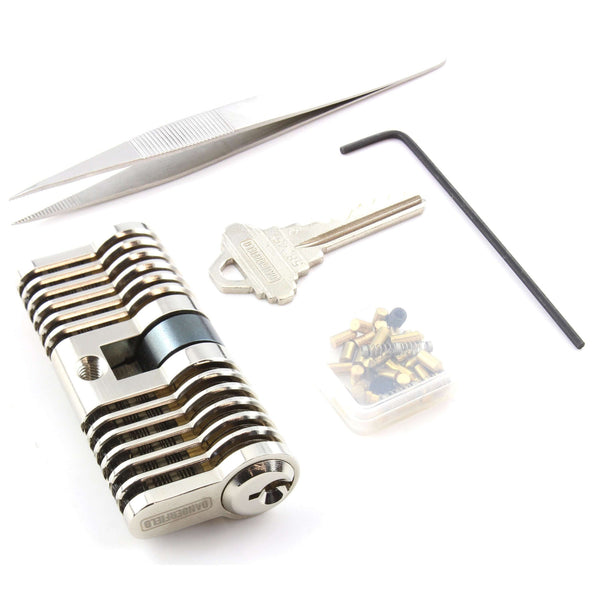 Step up to a Euro cutaway
Practice Lock, Repinnable, Progressive, Double-Sided Euro, Aluminum Cutaway Training by Dangerfield
$69.99
Shop the Euro cutaway


Dangerfield Repinnable Practice Lock Set: Aluminum Cutaway + Mortise Kit
$105.99$117.98Unit price /Unavailable
 Video
Dangerfield Repinnable Practice Lock Kit + Pins, Springs, Stoppers, Hex Allen Key
Infinite Practice Lock & Kit
$47.99Unit price /Unavailable

Practice Lock, Repinnable, Progressive, Double-Sided Euro, Aluminum Cutaway Training by Dangerfield
Aerospace Aluminum Lock
$69.99Unit price /Unavailable

Practice Locks Set, 3 Clear Progressive Locks - Easy to Hard
Go from Beginner to Pro fast
$49.99Unit price /Unavailable


Dangerfield Clear Practice Locks For Training (3) - acrylic lock, padlock, double-sided
Visible Pin Movements
From $54.99Unit price /Unavailable

Practice Lock - Dangerfield Infinitus Repinnable Cutaway & Tweezers
$49.99$59.95Unit price /Unavailable

Dangerfield Clear Acrylic Practice Lock - Standard Pins - Medium difficulty
$19.99$29.99Unit price /Unavailable

Clear Practice Lock - Training Padlock Ideal for understanding lock mechanisms & education
$17.99$18.99Unit price /Unavailable


SouthOrd Cutaway Training Handcuffs - Clear Working Mechanism
$26.99$29.99Unit price /Unavailable


Your next step
What do you want to do next?
-
Watch the pins move
A clear body shows every pin stack lift and set while you pick, so you can match what your fingers feel with what the pins are doing.
-
Meet security pins
Spool and serrated pins give you false sets and counter-rotation. The Eureka set puts them in order, so each new feel arrives one at a time.
-
Build your own challenge
Re-pinnable locks let you swap pins, springs and stoppers and drop in security pins, so one lock keeps teaching you for years.
-
Need picks too?
A practice lock is the target. You still need picks and a tension tool to work it, and the Lokko Beginners Box puts picks, tensioners and practice locks in one box.
-
Learn what you're feeling
The Beginners Visual Guide shows tension, pin feedback and false sets in 200+ color illustrations, so every session on the lock means more.
-
See it, then pick it blind
Two Dangerfield re-pinnable locks in one set: an aluminum cutaway to watch the pins, and a mortise lock that takes the window away.
Why practice locks
Every lock you open starts on a practice lock
Most first time frustration comes from not knowing what the pins are doing. A practice lock fixes that. You can pick it over and over, see the mechanism, and add difficulty only when you're ready.
See what your fingers feel
Clear and cutaway bodies show the pin stacks, so you learn the feel of a set pin faster than you would on a solid lock.
Harder pins in a sensible order
Move from standard pins to spools and serrated pins one step at a time, so false sets make sense when you meet them.
One lock, years of practice
Re-pinnable locks let you change the pins and raise the difficulty, so the lock grows with your skill.
A practice lock is a lock built for learning. It gives you the same pins, springs and shear line as the locks on real doors, with clear walls, a cutaway face or a re-pinnable core so you can see what is happening, reset it and make it harder as you improve. Most first-time frustration comes from practicing on the wrong lock with no way to connect what your fingers feel with what the pins are doing. The right practice lock fixes that, and it keeps your training on a lock you can pick, rebuild and pick again.
Types of Practice Locks
Clear Locks
A clear lock has a see-through body, so you watch each pin lift, bind and set at the shear line as you pick. That visual link is the fastest way to understand tension, oversetting and reset. The Dangerfield Eureka set gives you three clear locks in a deliberate progression: standard pins, then spool pins, then serrated pins, so you move from your first open to your first security pins on one desk. The clear double-sided practice lock lets you learn with your eyes on one side, then turn it away and learn the feel.
Cutaway Locks
A cutaway lock is a real metal lock machined open to show the pin stacks. It picks like the locks you meet every day, so the tension and pin feedback you build carries straight over to them. The brushed Dangerfield aluminum cutaway has six pin chambers and a 10.6 oz body that feels like a serious training tool. See the full range of metal cutaway practice locks.
Re-pinnable Locks
A re-pinnable lock never turns into desk clutter. Once you can open it, take it apart, change the pin stacks, drop in security pins and you have a new lock to beat. The Dangerfield re-pinnable mortise kit comes with 30+ standard, spool and serrated pins and the hex key, so you can start with a single pin and build up the chambers as your hands get ready. Pair it with the aluminum cutaway in the re-pinnable practice lock set: watch the pins move in the cutaway, then prove your hands can read the same feedback on the mortise lock with no window.
Which Practice Lock Should You Start With?
Start with clear locks if you are new, because seeing the pins makes the feel make sense. The Essentials pack gives you three practice locks and our how-to-pick booklet, which walks you from your first pin to confident picking. The Dangerfield clear training set gives you an acrylic cylinder, a clear padlock and a double-sided lock in one box. Move to a cutaway or re-pinnable lock when clear locks start opening easily, and keep re-pinning it harder from there.
Pick Your Practice Lock With the Right Tools
A practice lock is the target, so you still need picks and a tension tool to work it. If you want everything in one box, the Lokko Beginners Box is a lock picking kit with practice locks: 16 picks, 6 tensioners, 2 clear practice locks and a quickstart guide. Otherwise browse our lock pick sets, read the best lock pick sets buyer guide, and start with the absolute beginners guide to how to pick locks or the wider articles archive.
LockPickWorld was founded by Chris Dangerfield, with 20+ years in locksport. We have shipped to 100,000+ customers, earned 4.5★ from 11,800+ reviews, and offer free US shipping on orders over $49. Read more about our story.
New to practice locks?
What is a practice lock, and why start with a clear one?
A practice lock is a lock you can pick over and over without touching one that's protecting anything. It's where you learn to feel each pin and control your tension, and later it's where you meet security pins for the first time.
A clear practice lock has a see-through acrylic body, so you can watch each pin stack lift and set at the shear line while you pick. Seeing that happen connects what your fingers feel with what the pins are doing, and that connection is the hardest thing to learn on a solid lock. Use the clear view to understand the movement first, and then turn the lock away from your eyes and pick it by feel.
- Clear locks have see-through bodies that show the whole pin tumbler mechanism as you pick.
- Cutaway locks are real metal locks with a section machined away, so you can see the pins, springs and chambers.
- Progressive and re-pinnable locks let you swap in harder pins as you improve.
- Dimple practice cylinders have paired top-and-bottom pins, so you can practice dimple lock picking.
If you're starting out, begin with the Clear Double-Sided Practice Lock ($17.99), which is built for single pin picking. When that feels easy, step up to the Dangerfield Eureka set ($49.99). Its three clear locks use standard pins, spool pins and serrated pins, so you meet false sets and counter-rotation in a sensible order. If you don't have any picks yet, the Lokko Beginners Box ($49.99) puts picks, tensioners and practice locks in one box.
Last updated:
Practice locks at a glance
Our practice locks side by side, from the clear trainer you start on to the re-pinnable locks you grow into.
| Lock | Type | Includes | Best for |
|---|---|---|---|
| Clear Double-Sided Practice Lock | Clear, single pin | Clear acrylic body, two sides to pick | Your first lock. Watch each pin set as you pick. |
| Dangerfield Eureka Training | Clear set (3 progressive pins) | Standard Pin, Spool Pin, Serrated Pin locks | Step through pin types in order. Same form, harder pins. |
| Dangerfield Essentials Pack | Bundle | Three practice locks + how-to picking booklet | Locks plus instruction in one box. |
| Dangerfield Repinnable Practice Lock Kit | Re-pinnable mortise | Lock, 30+ pins, springs, stoppers, hex key | Years of practice via re-pinning. Add security pins. |
| Dangerfield Aluminum Brushed Double Re-pinnable | Cutaway aluminum, re-pinnable | Aluminum cutaway, swappable pins, tweezers | Cutaway view plus full re-pinning kit. |
| Dangerfield Cutaway + Mortise Set | Two re-pinnable locks | Aluminum cutaway lock + mortise kit | See it on the cutaway, then pick it blind on the mortise. |
A practice lock is the target. You still need picks and a tension tool to work it. Browse our lock pick sets or read the best lock pick sets buyer guide for starter recommendations.
Practice lock FAQ
What is a practice lock?
What is a practice lock?
A practice lock is a lock designed for picking practice. They expose the pin tumbler mechanism (via a clear plastic body or cutaway construction), let you re-pin to vary difficulty, or both. The goal is controlled, repeatable practice without working on locks that are in use.
Is a clear practice lock worth it?
Is a clear practice lock worth it?
It's worth it, especially in your first few weeks. A clear lock lets you watch a pin bind and set, and you'll see right away when you've lifted one too far. That makes your mistakes much easier to understand. Don't stay dependent on the clear body, though. Once you can open it while you watch, try picking it with the lock facing away from you. The Eureka three-lock set adds spool and serrated pins in clear bodies, so you can see what a false set looks like before you meet one in a solid lock.
What's the difference between clear, cutaway, and progressive practice locks?
What's the difference between clear, cutaway, and progressive practice locks?
A clear lock has a transparent plastic body so you can see the pins set as you pick. A cutaway lock is a real metal lock with portions of the body removed to expose the mechanism. A progressive (or re-pinnable) lock lets you change pin count and type to step up difficulty as your skill grows. Most pickers use all three at different stages.
Do I need a lock pick set as well as a practice lock?
Do I need a lock pick set as well as a practice lock?
Yes. A practice lock is the target. You still need picks and a tension tool to work it. Browse our lock pick sets or read the best lock pick sets buyer guide for starter recommendations.
Are practice locks easier than real locks?
Are practice locks easier than real locks?
Most are tuned to be approachable, with standard pins, low pin counts, and no security pins (spools, serrated). The point is to build feel for single-pin picking and tension control before tackling real locks with anti-pick features.
Which practice lock should I start with?
Which practice lock should I start with?
If you don't have any picks yet, start with the Lokko Beginners Box ($49.99), which gives you picks, tensioners and practice locks together. If you already have picks, the Clear Double-Sided Practice Lock ($17.99) is the cheapest way to see the mechanism at work. The Re-pinnable Practice Lock Kit ($47.99) lets you add pins to make it harder as you improve.
Can I re-pin a practice lock to change difficulty?
Can I re-pin a practice lock to change difficulty?
Yes, with a re-pinnable model. The Aluminum Double Re-pinnable Lock ($69.99) and the Re-pinnable Practice Lock Kit ($47.99) let you swap pins, springs, and stoppers to adjust pin count, add security pins, or change pin heights.
When should I move from practice locks to real locks?
When should I move from practice locks to real locks?
When you can consistently pick a 5-pin standard practice lock single-pin, with intentional tension and pin-by-pin set. A commodity Master padlock or a rim cylinder from a hardware store makes a good next step. Most pickers keep using practice locks alongside real ones to drill specific techniques like security pins or dimple.
Should I get a single hard lock or a progressive set?
Should I get a single hard lock or a progressive set?
A progressive set with multiple locks at increasing difficulty builds skill faster because you practice the same techniques against more challenging targets. The Dangerfield Training Set of Three ($54.99) gives a clear path. A single re-pinnable lock works if you want to grow with one piece of gear that adapts.


